IP basics in Life sciences
In the previous volume, I introduced the patent strategies employed by originator companies. As patent disputes between originators and generics intensify, originators have continued to evolve their tactics—leveraging patent term extensions, use patents, and divisional applications—to shut out generic entry.
Their counterparts on the generic side, however, are far from passive. They fight back with invalidation trials to knock out originator patents, negotiate directly with originators, and even find ways to navigate around patent linkage systems. Through these sophisticated strategies, generics aim to break through the originators’ patent barriers.
In this volume, we will take a closer look at the strategic approaches used by generics.
Outsmarting Originator Patents
– Strategic Moves by Generics –
Generic Patent Strategies – The Basics
A fundamental principle of patent strategy for generic manufacturers is to secure market entry as early as possible. In other words, it is crucial for generics to file their applications with the Ministry of Health, Labour and Welfare as early as they can and obtain approval at the earliest possible timing.
So, when exactly can generics begin filing their applications and seeking approval?
Timing of Generic Applications – End of the Re-examination Period
One might assume that if generics aim to file their applications with the MHLW as early as possible, they could simply submit them immediately after the originator product is launched. However, the timing of generic applications is restricted by the re-examination system prescribed under the Pharmaceuticals and Medical Devices Act. Generics may not file their applications until the originator’s re-examination period has ended.
The re-examination system requires pharmaceutical companies to collect real-world data on the efficacy and safety of a new drug after approval and, following a specified period, to undergo a renewed evaluation of the product (Article 14-4 of the PMD Act). The re-examination period for new drugs—originator products containing a new active ingredient—is eight years in principle, and depending on the product category, it ranges from four to ten years.
While the re-examination period may be extended, it is never shortened or terminated early. Consequently, the expiration of the re-examination period becomes the key—and indeed an absolute prerequisite—for generics to file their applications.
Timing of Generic Approvals – Patent Expiry
In the review of generic applications, the authorities examine whether the proposed generic product would infringe any originator patents. Even if the product clears all regulatory requirements, it will not be approved if the MHLW determines that granting approval would raise patent issues. In such cases, approval is withheld until the relevant originator patents expire. This mechanism is the patent linkage system introduced in Vol. 9.
Although the patent term is generally 20 years from filing (with a possible extension of up to five years), a patent becomes void ab initio if it is invalidated through an invalidation trial. Therefore, to obtain approval as early as possible, generics must thoroughly investigate originator patents and proactively invalidate any patents that could block their approval.
Sophisticated Strategies Used by Generics
Once the re-examination period ends, generics can file their applications. To further accelerate the timing at which approval becomes possible—and ultimately achieve earlier market entry—generics employ several sophisticated patent strategies. Three major approaches are:
Strategy 1: Breaking Down Originator Patents – Invalidation Trials
Strategy 2: Getting Ahead of Other Generics – Withdrawing Invalidation Trials and Licensing
Strategy 3: Navigating Patent Linkage – “Bug-eaten” (Carve Out) Applications
Strategy 1: Breaking Down Originator Patents – Invalidation Trials
If an originator patent remains even one year after the end of the re-examination period, the patent linkage system will prevent approval of the generic product. Even if the generic clears all regulatory requirements, the MHLW will determine that “approval would raise patent concerns,” and the product will not be approved until the originator patent expires. In such situations, a standard strategy for generics is to file an invalidation trial in advance and aim to eliminate the blocking patent before the anticipated approval date.
Because invalidation trials typically take at least two to three years from filing to conclusion, generics must work backward from their target approval timing and begin preparations early. Preparation requires not only conducting patent searches but also carefully formulating the legal theories and arguments for invalidation—work that is both time-consuming and resource-intensive. Treating invalidation trials as an integral part of generic product development and securing sufficient time and budget for them is essential.
Strategy 2: Getting Ahead of Other Generics – Withdrawing Invalidation Trials and Licensing
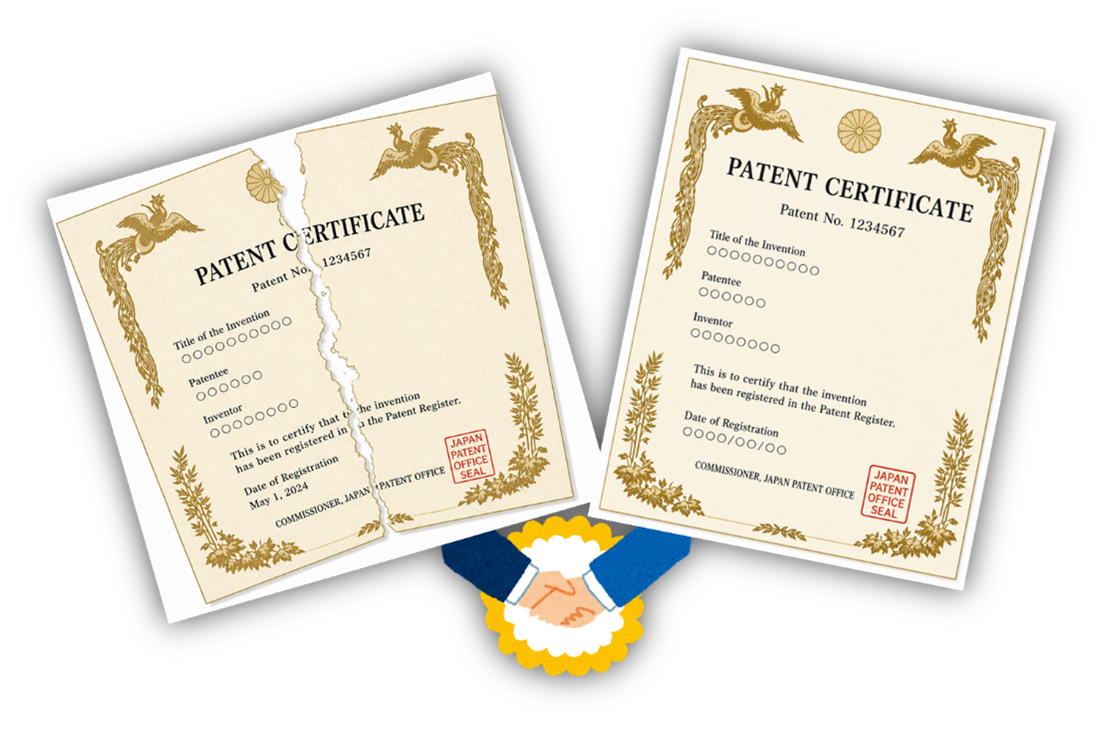
In recent years, some generics have begun using invalidation trials not only to eliminate patents but also as leverage in licensing negotiations. The strategy is to file an invalidation trial ahead of competing generics and, once the patent appears likely to be invalidated, approach the patent owner (the originator) to negotiate a license in exchange for withdrawing the trial.
Once the trial is withdrawn, the patent remains intact. For other generics that do not have a license from the originator, the patent continues to block approval. As a result, the company that first filed the invalidation trial, negotiated with the originator, and withdrew the trial can secure the earliest market entry.
This strategy allows a generic company not only to challenge the originator but also to gain an advantage over competing generics.
Strategy 3: Navigating Patent Linkage – “Bug-eaten” (Carve Out) Applications
When an originator product has multiple approved indications, it is possible that patents remain only for some of them. In such cases, generics may file bug-eaten (carve out) applications, seeking approval only for the indications for which the patents have already expired. By doing so, generics can avoid the patent linkage barrier and obtain approval earlier.
Once a generic is approved through a bug-eaten application, physicians may prescribe it off label for indications not included in the approval. This may trigger additional issues, but that is a topic for another time.
How did you find this look at generic patent strategies, following our previous volume on originator strategies?
New tactics continue to emerge one after another, and the battles are no longer limited to originators versus generics — sometimes generics compete among themselves. The landscape resembles a Samurai-era battlefield, with shifting alliances and strategic maneuvering.
In the next volume, we will explore this Samurai-era-like battlefield of patent disputes between originators and generics. Stay tuned!
Author Profile

Yasuko Tanaka
President & Patent Attorney, S-Cube International Patent Office / CEO, S-Cube Corporation
Outside Director, Strategic Capital Inc.; Part-time Lecturer, Tokyo University of Agriculture and Technology Graduate School; Expert Commissioner in Intellectual Property Litigation
Previously served in the intellectual property departments of Teijin, Pfizer, and 3M Japan, with extensive experience in domestic and international IP practice, IP strategy development, contract negotiation, IP education, and project management. Founded S-Cube Corporation in April 2013 to strengthen global competitiveness of Japanese companies through IP strategy, and subsequently established S-Cube International Patent Office in August 2013 to provide seamless services including patent prosecution. Holds a B.Sc. in Biochemistry from Chiba University (1990).