Archives of Analytical Instruments That Unravel Life
Part 2
The Invention of PCR
The author first heard the term “PCR” in the early 1980s while undergoing training on a DNA synthesizer in the suburbs of Boston. Dr. Kary Mullis, who worked for a venture company called Cetus on the US West Coast, was an eccentric scientist, yet also a surfer and an unparalleled playboy, so he was considered a bit of an oddball within the company.
In 1983, while pondering how to amplify DNA using DNA polymerase, he was driving his girlfriend along a winding mountain road toward a cabin. As he repeatedly turned the steering wheel, he conceived the idea of a thermal cycler that repeatedly heated and cooled samples. He abandoned the cabin trip, returned straight to the lab, and immersed himself in developing PCR.
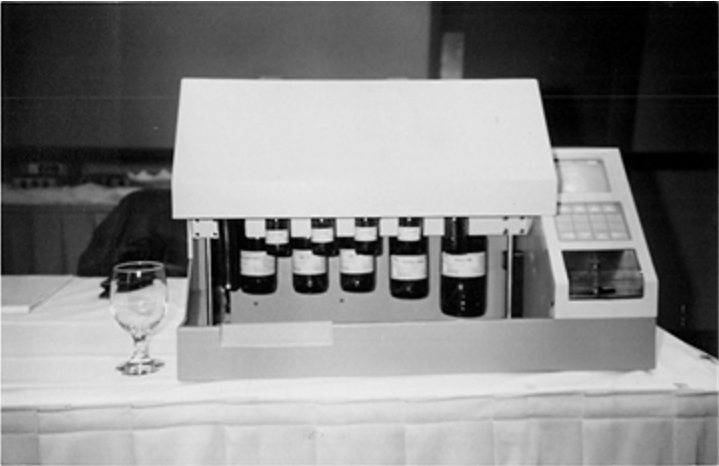
After successfully amplifying DNA in 1985, Dr. Maris repeatedly pitched his idea within the company, but no one listened. He then consulted his friend Dr. Ron Cook. Ron had just founded a venture company called Biosearch Inc. and was deeply involved in developing DNA synthesis and peptide synthesis instrument (Figure 1). He explained PCR’s future potential to Cetus Corp. and convinced them of its promise.
BioSearch had developed equipment as advanced as that of its West Coast competitor, Applied Biosystems (ABI, now a division of Thermo Fisher Scientific). However, after being acquired by Millipore (now Merck Millipore), its R&D division was relocated to the East Coast. The development team subsequently resigned, and both the technology and the equipment development plans quietly vanished.
Had Ron shifted the company’s focus to developing thermal cyclers back then, the flow of suppliers to the market might have changed. Dr. Maris passed away in August 2019. Just a few months later, the novel coronavirus began raging across the globe, leading people worldwide to become familiar with the three letters “PCR.” Isn’t that a strangely ironic turn of events?

Mr. Hisashi Iwase
Life Science Innovation Advisor, Japan Analytical Instruments Manufacturers’ Association (JAIMA),
and President & CEO of BioDiscovery Inc.
Born in Tokyo, 1951. Graduated from Nihon University, Faculty of Science & Engineering, Department of Industrial Chemistry.
Previously held leadership roles in analytical and life science instrument businesses at Merck Japan, Waters Japan,
Millipore Japan, PerSeptive Biosystems Japan, Applied Biosystems, Varian Technologies, and Agilent Technologies.
Founded BioDiscovery Inc. in 2001.
Serving concurrently as Life Science Innovation Advisor at JAIMA since 2013.