Organoid Research & 3D Cell Culture
Organoid Research: What Comes After “Can We Make Them?”
— A Hands-On Seminar on Reproducibility, Maturation, and Long-Term Culture from the Perspective of the Culture Environment
As organoid research continues to expand, the focus is shifting beyond simply asking whether a 3D model can be generated. Increasingly important questions include whether organoids can be cultured consistently, maintained over extended periods, and compared reliably across experiments.
From simply “generating” organoids to creating models that can be used reliably in research.
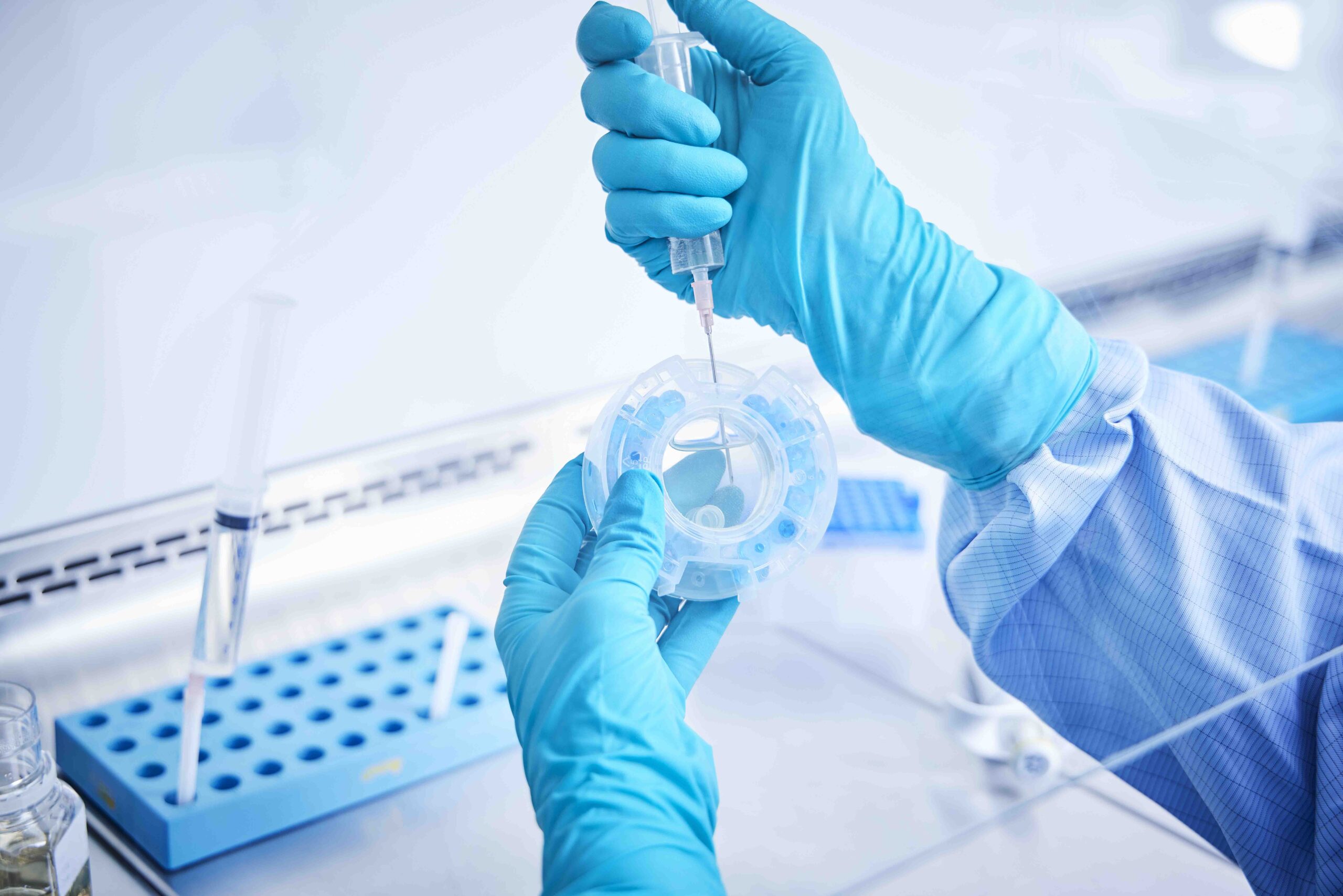
This seminar explores reproducibility, maturation, and long-term maintenance in organoid culture through the approach of dynamic 3D cell culture. In addition to lectures, participants will have the opportunity to see, handle, and experience the system in a hands-on session.
Generating Organoids Is Only the Beginning
Organoids, spheroids, and other 3D cell culture models are widely used to reproduce cell-cell interactions and tissue structures that are difficult to capture in conventional 2D culture.
However, once these models are applied to research, additional challenges often become apparent.
Reproducibility
Variations in organoid size or condition between experiments can make it difficult to compare and interpret results.
Maturation
Even when a 3D structure has formed, it may not necessarily have reached the desired level of tissue function or cellular maturation.
Long-Term Culture
As 3D constructs increase in size, oxygen and nutrient delivery to the interior, as well as waste removal, may affect culture conditions.
In other words, organoid research requires consideration not only of which cells and which media to use, but also the environment in which the cells are cultured.
Rethinking the Culture Environment
One approach to addressing these challenges is dynamic 3D cell culture, in which 3D constructs are maintained in suspension while the culture medium remains in motion.
ClinoStar 2 from Celvivo is a dynamic culture system designed for 3D cell culture under low-shear conditions.
Its dedicated reactors rotate gently to keep cells and 3D constructs suspended. By creating a dynamic culture environment, the system is designed to reduce nutrient- and oxygen-depleted zones around the constructs.
Key Aspects of the 3D Culture Environment with ClinoStar 2
- Dynamic 3D culture under low-shear conditions
- An approach designed to support nutrient and oxygen availability around 3D constructs
- Independent rotational control of six reactors
- Real-time monitoring with six individual cameras
- Temperature and CO₂ control, with optional hypoxic culture
- Support for remote operation and monitoring
How Can the Culture Environment Affect Research Results?
As 3D constructs become larger, oxygen and nutrients may become more difficult to deliver to the center, and internal conditions may differ from those at the outer surface depending on the culture method.
Celvivo has published a brain organoid case study comparing dynamic culture using ClinoStar with conventional orbital shaker culture. The study discusses long-term culture under low-shear conditions with dynamic mass transport, as well as the assessment of necrotic core formation in brain organoids cultured using ClinoStar.
It is important to note that no single culture system can resolve every challenge.
Optimal culture conditions vary depending on the cell type and research objective. Therefore, it is essential to consider what kind of culture environment is appropriate for each individual research model.
See It, Handle It, and Experience It at the Seminar
Catalogs and websites alone cannot always convey the actual handling of a system, how the reactors are used, or how the technology fits into a day-to-day cell culture workflow.
The “1st Yamato Scientific × VERITAS Hands-On Seminar” will include both a lecture on dynamic suspension organoid culture and a hands-on session using ClinoStar.
Through a live demonstration and hands-on experience with the dedicated reactors, participants will be able to explore whether the approach may fit their own research and how it differs from their current culture methods.
Seminar Program
Opening (13:30–13:35)
Session 1 (13:35–14:35)
“Expanding Applications of Dynamic Suspension Organoid Culture: From Toxicity Assessment to Co-Differentiation and Vascularized Models”
Speaker: Tomoko Peerlund, Celvivo
Hands-On Session 1 (14:45–15:30)
“See, Touch, and Learn: Hands-On Experience with a Dynamic Suspension Organoid Culture System”
Session 2 (15:40–16:00)
“Introduction to Organoid-Related Products — ES/iPS Cell-Derived Neural Cells and Organoid Products”
Speaker: Katsuta Kozuka, VERITAS Corporation
Recommended for Researchers Who:
- Are working with organoids or spheroids
- Are experiencing challenges with reproducibility or variability in 3D culture
- Are exploring long-term culture or maturation strategies
- Are considering 3D culture for toxicity assessment, drug discovery, or disease modeling
- Would like to see and operate a dynamic suspension culture system in person
Event Details
| Seminar | 1st Yamato Scientific × VERITAS Hands-On Seminar Frontiers in Organoid Research — Latest Technologies and Applications Supporting Generation, Culture, and Maturation — |
|---|---|
| Date & Time | Friday, October 16, 2026, 13:30–16:00 |
| Venue | Life Innovation Center, 4F, Conference Rooms A, B & C 3-25-22 Tonomachi, Kawasaki-ku, Kawasaki, Kanagawa, Japan |
| Participation Fee | Free of charge |
| Capacity | 30 participants |
Could Rethinking the Culture Environment Help Address Your Research Challenges?
Reproducibility, maturation, and long-term culture may appear to be separate challenges in organoid research, but each is closely linked to the culture environment.
If you are experiencing variability in your current culture conditions or considering more stable long-term 3D models, it may be useful to look beyond cells and media and reconsider the environment in which your models are cultured.
This seminar provides an opportunity not only to learn about the technology but also to see, handle, and experience it firsthand.
Free Admission | Limited to 30 Participants
See and experience a new approach to organoid culture firsthand.
Related Information
About This Article
This article was prepared based on the official website and publicly available materials provided by Celvivo, the manufacturer of ClinoStar 2. Research results and culture outcomes described in this article may vary depending on the cell type, culture conditions, and experimental system. For the latest product specifications and technical information, please refer to the official Celvivo website and the latest product documentation.