“Various Modifications Beyond Amino Acids — Phosphorylation —” (Part 3)
Diverse chemical modifications beyond the genetic code
From this article onward, we will explore the various chemical changes that occur in protein molecules, with a particular focus on those that take place within living systems—known as post-translational modifications (PTMs).
Post-translational modifications refer to the chemical changes that proteins undergo after they are synthesized through translation based on mRNA information. These modifications occur on the amino acids that make up the protein. The sequence of amino acids is determined by the “innate” information encoded in the genetic code. However, even with today’s scientific knowledge, it is extremely difficult in most cases to predict from genetic information alone which amino acids will be modified and in what way. Many modification structures essential for sustaining life have been identified, yet it is believed that many still remain undiscovered.
In recent years, it has also become clear that certain post-translational modifications, such as oxidation and deamidation, can change in response to environmental factors including diet, mental state (stress), and aging. In other words, these are acquired, or “postnatal,” modifications. This field is expected to grow further as an important area of research closely linked to health maintenance and lifespan extension.
By significantly altering protein function, post-translational modifications regulate physiological responses and are deeply involved not only in sustaining life but also in diseases and aging—phenomena that affect our daily lives.
The determination of the complete human genome sequence in 2002 was a landmark event still fresh in the memory of the life science community. At the time, it was revealed that the number of human genes (protein-coding regions) was only around 30,000 (now estimated to be about 20,000), which surprised researchers, as it seemed far too few to sustain life. Today, however, it is believed that post-translational modifications dramatically expand the diversity of “functional molecules” generated from a single gene.
While comprehensive genetic information (genome analysis) has greatly contributed to disease treatment, the field has now shifted toward uncovering biological phenomena that cannot be explained by genetic information alone. At the heart of this new stage lies the understanding and control of post-translational modifications—the focus of this article.
Phosphorylation: a mechanism for dynamic regulation
Modifications that occur on proteins can be broadly divided into two types. One type includes modifications such as phosphorylation, glycosylation, and lipid modification, which are actively carried out by enzymes to maintain homeostasis. The other includes modifications such as oxidation and deamidation, which occur spontaneously in response to environmental factors and aging.
Reversible phosphorylation within cells primarily occurs at serine (Ser), threonine (Thr), and tyrosine (Tyr) residues in the amino acid sequence (Figure 1). Phosphorylation introduces a negative charge to part of the protein, creating new electrostatic interactions with positively charged regions either within the same molecule or in nearby proteins.
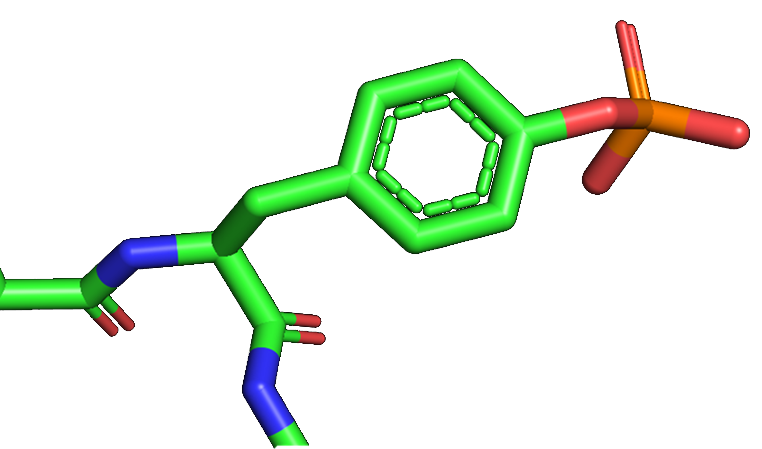
As a result, protein structures change dynamically, leading to new intermolecular interactions. This seemingly simple reaction plays a central role in signal transduction, transmitting signals from outside the cell to the nucleus and regulating fundamental biological processes such as cell proliferation and differentiation.
Phosphorylation is catalyzed by specific enzymes called kinases, which use adenosine triphosphate (ATP) as a phosphate donor. At the same time, phosphatases continuously remove phosphate groups. Under normal conditions, proteins remain in an inactive state. Upon receiving a stimulus, they transiently switch to an active state, transmit signals downstream, and quickly return to their original state. Phosphorylation thus enables highly precise temporal and spatial control.
Phosphorylation as a target in drug discovery
Identifying phosphorylation sites is essential not only for understanding protein function but also for designing inhibitors such as anticancer drugs.
For example, approximately 90% of chronic myeloid leukemia (CML) cases are caused by an abnormal fusion gene product, BCR-ABL, generated by chromosomal translocation (t(9;22)). This abnormal tyrosine kinase loses its normal regulatory control and becomes constitutively active through autophosphorylation, continuously driving uncontrolled cell proliferation.
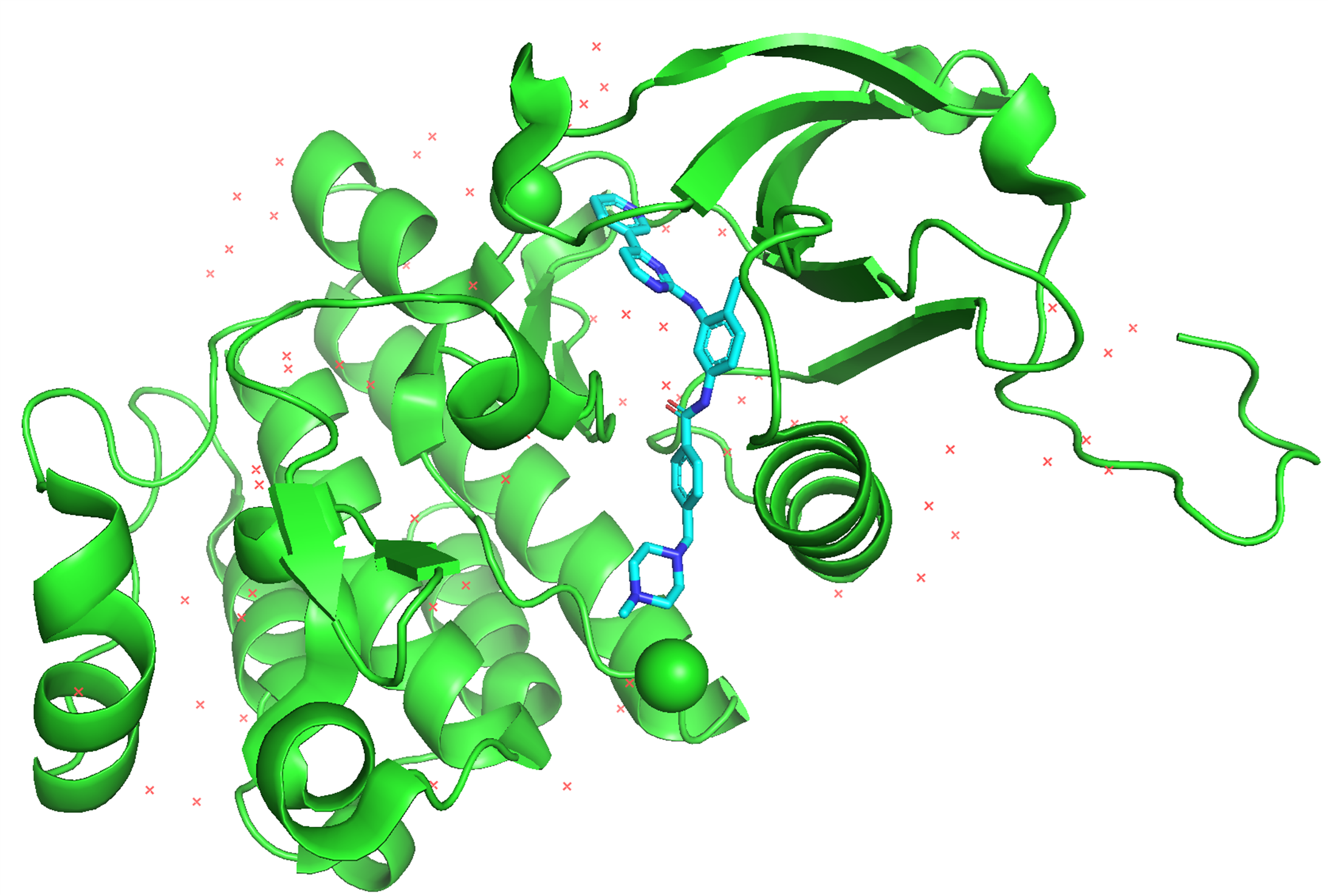
A breakthrough drug that revolutionized cancer treatment in 2001 is imatinib (trade name: Gleevec). Imatinib is precisely designed to fit into the ATP-binding site of the kinase, as well as a hydrophobic pocket that appears only in its inactive form. By doing so, it physically locks the abnormal enzyme in place and shuts down the cancer-promoting signaling pathway at its source (Figure 2).
In future articles, as space permits, we will continue to explore the fascinating world of post-translational modifications in proteins.
Author Profile

Toshifumi Takao
Professor Emeritus, Osaka University; Ph.D. in Science.
From his fourth year as an undergraduate until retirement, he was affiliated with the Institute for Protein Research, Osaka University, where he consistently engaged in research and education in protein chemistry and structural biology.
He currently serves as a Specially Appointed Professor (part-time) at the same institute, and as a Life Science Fellow in the Product Division, Rigaku Corporation.
In 2022, he was awarded an honorary doctorate in biochemistry by the University of Havana, Cuba.