Book Introduction: Pharmaceutical Patent Strategy Vol. 1 — Comprehensive Edition
The pharmaceutical industry operates under a distinctive combination of regulatory and intellectual property frameworks. While the manufacture, marketing, approval, and pricing of pharmaceutical products are governed by regulatory systems, patents protecting products and technologies can significantly influence business competition.
Pharmaceutical Patent Strategy Vol. 1 — Comprehensive Edition provides a systematic explanation of the complex relationship between Japan’s pharmaceutical regulations and patent system from the perspective of professionals working in the pharmaceutical business. It covers a broad range of topics, including patent strategies for originator and generic pharmaceutical companies, patent term extensions, the re-examination system, patent linkage, patent disputes, patent searches, and case studies based on actual legal proceedings.
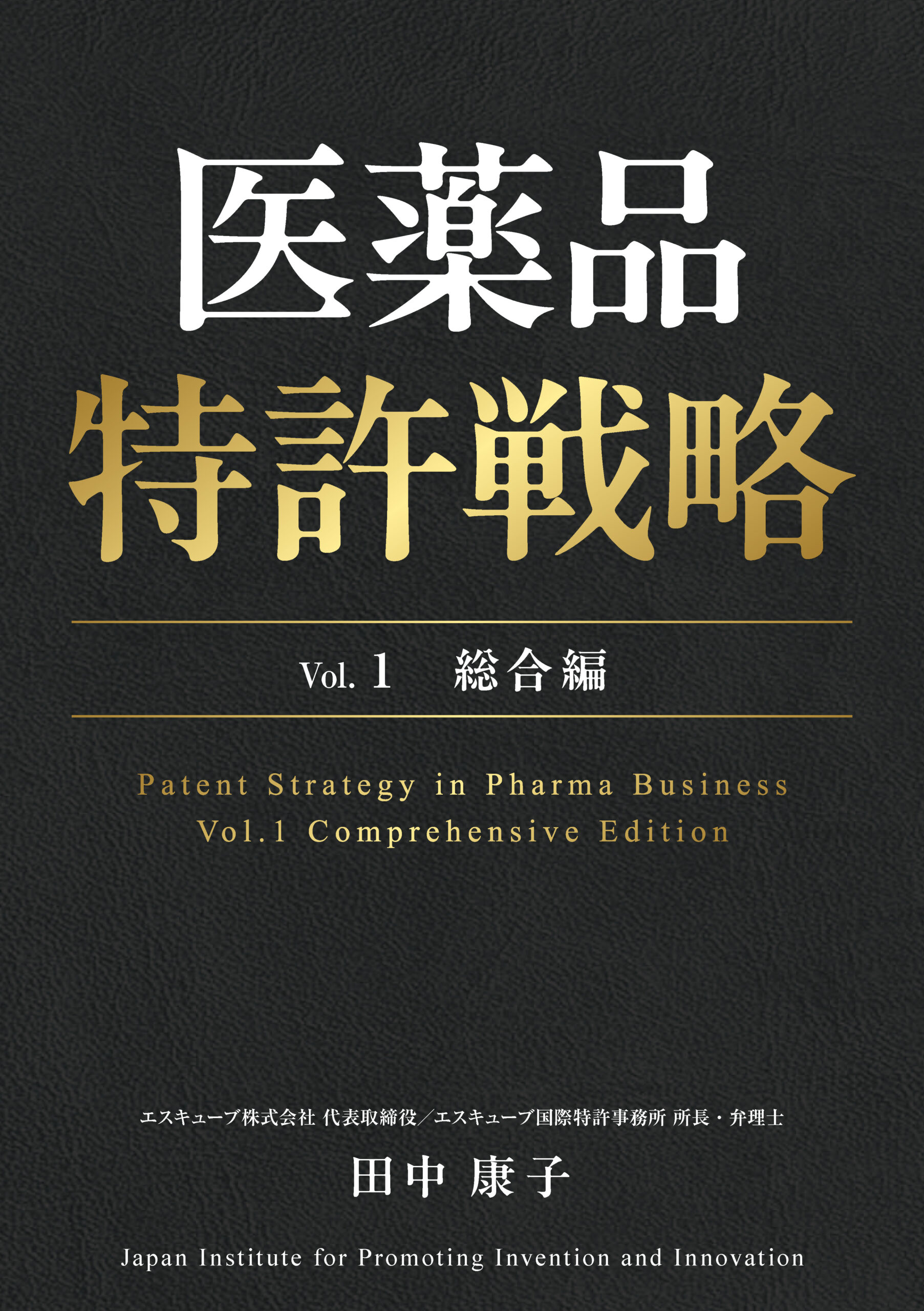
Original Japanese title: 『医薬品特許戦略 Vol.1 総合編』
Language notice:
This book is currently available in Japanese only. This English page provides an overview for international readers, but the full text of the book is written in Japanese.
A Practical Guide to the Intersection of Pharmaceutical Regulation and Patents
Competing in the pharmaceutical market requires an understanding of both regulatory and patent systems. Originator companies seek to protect their pharmaceutical products, while generic companies work toward market entry. As a result, the industry faces complex intellectual property disputes involving patent infringement litigation, patent invalidation proceedings, regulatory approval, and product launch strategies.
Rather than merely explaining individual laws and systems, this book organizes the actions and strategic considerations required at each stage of research and development, regulatory approval, market entry, and post-launch business activities. It also connects legal and regulatory principles with actual cases, providing practical perspectives that can be applied to pharmaceutical patent strategy.
Why This Book Is Valuable for International Companies
Japan has pharmaceutical regulatory, pricing, approval, and patent practices that may differ from those in other markets. For overseas pharmaceutical, biotechnology, healthcare, and intellectual property professionals, understanding these Japan-specific systems is important when evaluating market entry, product launches, licensing, partnerships, and long-term business development.
This book can help international companies and their Japanese partners develop a clearer understanding of the legal and commercial environment surrounding pharmaceutical products in Japan. It may be particularly useful when:
- Assessing entry into the Japanese pharmaceutical market
- Planning the launch or lifecycle management of a pharmaceutical product in Japan
- Evaluating patents and regulatory exclusivity before licensing or partnering
- Conducting intellectual property due diligence for alliances, investments, or acquisitions
- Developing strategies for originator products, generic drugs, or biosimilars
- Working with Japanese regulatory, legal, intellectual property, or business development teams
- Assessing patent litigation and market-entry risks in Japan
Pharma Nexus Series: Pharmaceuticals and Intellectual Property
Pharma Nexus also publishes a series of articles covering topics such as pharmaceutical product categories, patent fundamentals, patent term extensions, patent linkage, litigation, and patent strategies for originator and generic pharmaceutical companies. These articles can be used as introductory reading before the book or as supplementary material for reviewing individual topics.
Please note: The linked articles below are currently available in Japanese only.
・Part 1: Understanding Pharmaceutical Product Categories and Patents
・Part 2: How Low Is the Success Rate of New Drug Development?
・Part 3: How Is a Patent Obtained? — From Patent Application to Grant
・Part 4: Can a Patent Term Be Extended? — Japan’s Pharmaceutical Patent Term Extension System
・Part 5: How Generic Drugs Are Developed and Brought to Market
・Part 6: What Happens When a Company Is Sued for Patent Infringement?
・Part 7: Challenging Patents That Restrict Life Science Business
・Part 8: From Litigation to Licensing Revenue — The Opdivo and Keytruda Patent Dispute
・Part 9: Why Can a Generic Drug Application Be Blocked? — Understanding Patent Linkage
・Part 10: Advanced Patent Strategies Used by Originator Pharmaceutical Companies
・Part 11: Strategic Approaches Used by Generic Pharmaceutical Companies
・Part 12: Patent Disputes Between Originator and Generic Pharmaceutical Companies
Structure of the Book
The book is divided into three sections: Fundamentals, Applications, and Practice.
Fundamentals
This section explains the fundamentals of the patent system, including the process from patent application to grant, the scope and effect of patent rights, patent infringement, and the commercial use of patent rights. It also introduces industry-specific concepts such as originator drugs, generic drugs, biosimilars, and authorized generics.
Applications
This section examines systems that are particularly important to pharmaceutical patent strategy, including patent term extensions, the re-examination system and data protection, patent linkage, carve-out or “skinny-label” applications, and the research exemption. It also explains patent disputes before Japanese courts and the Japan Patent Office, as well as patent searches used to support strategic decision-making.
Practice
This section organizes patent strategies for originator and generic pharmaceutical companies according to the stages of research and development, regulatory approval, drug price listing, market launch, and post-launch business activities. Case studies based on actual disputes are used to illustrate key strategic issues and practical decision points.
Recommended for
- Research and development professionals at pharmaceutical and biotechnology companies
- Professionals working in intellectual property, legal affairs, regulatory affairs, and business development
- Sales, planning, communications, finance, and other functions supporting pharmaceutical businesses
- International companies considering pharmaceutical market entry or business expansion in Japan
- Professionals involved in licensing, partnering, investment, or intellectual property due diligence
- Government, patent office, and judicial professionals involved in pharmaceutical patents
- Students and graduate students in medicine, dentistry, pharmacy, science, engineering, law, economics, and business
- New intellectual property professionals in pharmaceutical-related companies
- Professionals seeking to organize their knowledge of pharmaceutical patent strategy systematically
Main Contents
Fundamentals
Chapter 1: Building a Foundation in Patent Law
- Patent applications and acquisition of patent rights
- Scope, effect, and commercial use of patent rights
Chapter 2: Characteristics of the Pharmaceutical Industry
- Overview of the pharmaceutical industry
- Categories of pharmaceutical products
- Originator pharmaceutical products
- Generic pharmaceutical products
Applications
Chapter 3: The Interaction Between Pharmaceutical Regulation and Patent Law
- Patent term extension system
- Re-examination system and data protection
- Patent linkage
- Carve-out or skinny-label applications
- Research exemption
Chapter 4: Systems Governing Patent Disputes
- Patent disputes between originator and generic pharmaceutical companies
- Proceedings before Japanese courts
- Proceedings before the Japan Patent Office
Chapter 5: Using Patent Searches in Pharmaceutical Patent Strategy
- Types and key considerations of patent searches
- Selective dissemination of information and patent monitoring
- Patent term extension searches
Practice
Chapter 6: Patent Strategies for Originator and Generic Pharmaceutical Companies
- Patent strategies for originator pharmaceutical companies
- Patent strategies for generic pharmaceutical companies
Chapter 7: Pharmaceutical Patent Strategy Case Studies
- Pharmaceutical patent strategy map
- Pharmaceutical patent strategy roadmap
- Maxacalcitol case
- Pitavastatin formulation case
- Pregabalin case
A Cross-Functional Guide to the Pharmaceutical Business in Japan
Pharmaceutical patents are not relevant only to intellectual property departments. Research and development, regulatory affairs, legal affairs, business development, sales, planning, and other functions involved throughout the pharmaceutical product lifecycle need to understand the relationship between pharmaceutical regulation and patent law.
This book can serve not only as an introduction for readers studying pharmaceutical patent strategy for the first time, but also as a practical resource for organizing internal knowledge, training employees, evaluating business strategy, and improving collaboration between international companies and their Japanese partners.
Important:
The book and the linked purchasing page are available in Japanese. International readers may wish to use the book together with support from a Japanese-speaking legal, regulatory, intellectual property, or business professional.
View Book Details / Purchase in Japanese
About the Author

Yasuko Tanaka
Representative Director, S-Cube Co., Ltd.
Principal and Patent Attorney, S-Cube International Patent Office
Outside Director, Strategic Capital, Inc.
Adjunct Lecturer, Graduate School, Tokyo University of Agriculture and Technology
Expert Commissioner in intellectual property litigation
Yasuko Tanaka gained extensive experience in Japanese and international intellectual property practice, intellectual property strategy development, contract negotiations, intellectual property education, and project management while working in the intellectual property departments of Teijin, Pfizer, and 3M Japan.
In April 2013, she established S-Cube Co., Ltd., an intellectual property consulting company focused on strengthening the international competitiveness of Japanese companies through the strategic use of intellectual property. In August of the same year, she established a patent office to provide seamless services, including patent prosecution.
She graduated from the Department of Chemistry, Faculty of Science, Chiba University, in March 1990, with a focus on biochemistry.